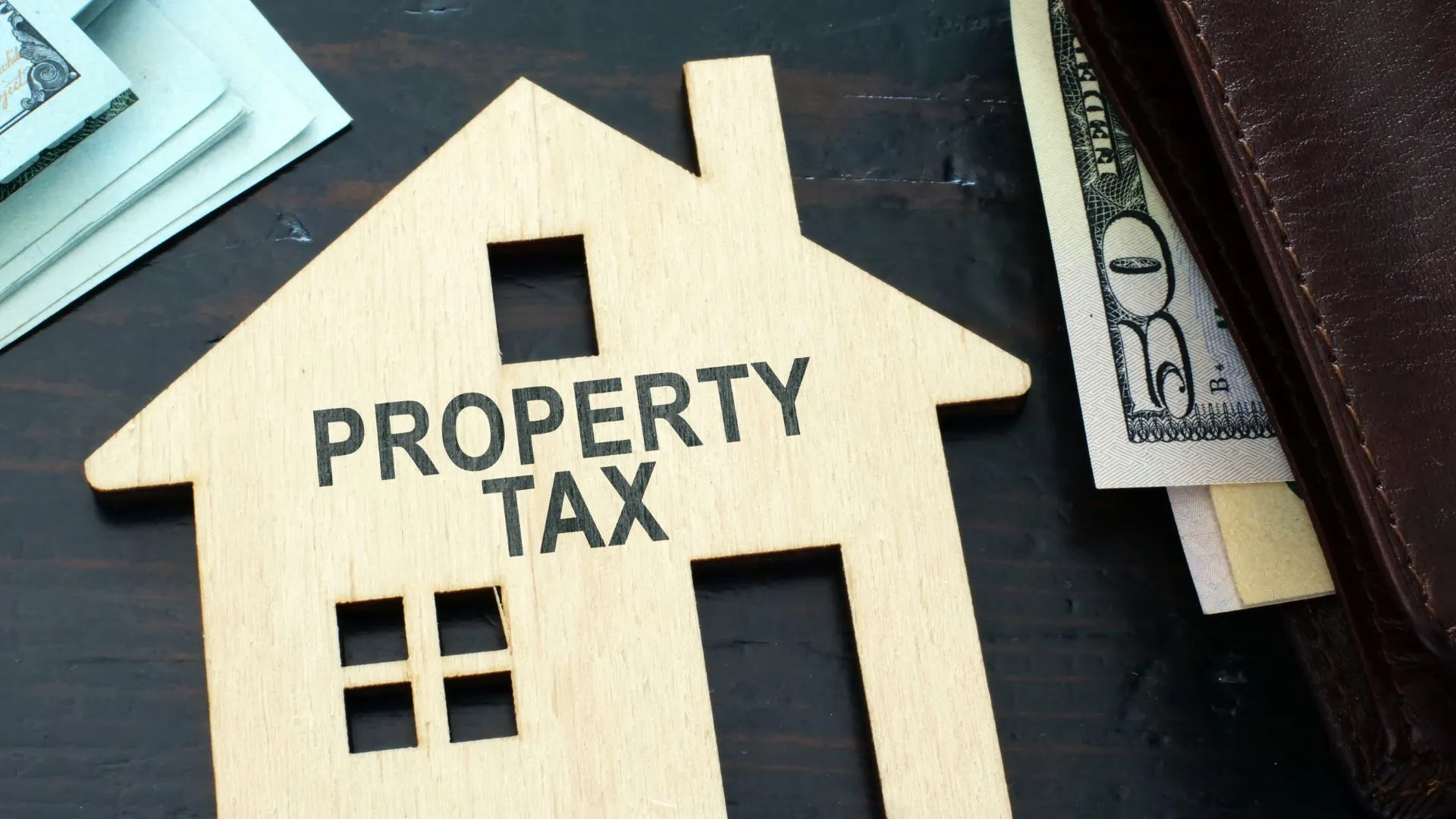
Latest status (June 2026): The property-tax proposal discussed here has advanced. During a special session held June 1–3, 2026, the Florida Legislature passed HJR 1F, the “Save Our Homes from Excessive Property Taxes” amendment, which now goes to Florida voters on the November 3, 2026 ballot and needs 60% approval to take effect (most provisions starting January 1, 2027 if approved). Florida’s property tax laws are unchanged today. For the current, detailed breakdown, see What Actually Happened in the 2026 Legislative Session.
Let’s be honest: no one likes paying property taxes. Now, imagine they just… vanished.
May 2026 Update
This article was originally published in November 2025. Since then, the 2026 regular session ended without passing property tax reform, and the April special session (April 28 through May 1) did not include property tax reform on its agenda. A possible summer special session may revisit the issue. Read the full current status »
That’s the blockbuster idea making waves in Tallahassee, and it has sparked a full blown political showdown. Governor Ron DeSantis wants to put a constitutional amendment on the 2026 ballot to eliminate property taxes on your primary home.
But before you plan your victory party, let’s be crystal clear about who this is for (and who it is not for):
-
YES: This proposal is only for your primary, homesteaded residence. This is for full-time Florida residents.
-
NO: This is not for second homes, investment properties, Airbnbs, commercial buildings, or properties owned by part-time residents (“snowbirds”). Those would all continue to pay property taxes as usual.
Is this a golden ticket for homeowners or a financial fantasy with a hidden catch? As your local real estate law attorneys, we’re cutting through the noise to give you the straight facts.
The “What”: A Political Showdown
This isn’t one simple bill. It’s a high-stakes debate with two competing visions:
-
The Governor’s Plan: Go big or go home. Governor DeSantis is pushing for the total elimination of homestead property taxes. He has dismissed other, smaller proposals as “political games” that don’t get the real job done.
-
The House’s Plan: A “choose your own adventure” for voters. The Florida House has introduced seven different proposals. These ideas range from a 10-year phase out to special exemptions for seniors or a 25% tax cut for all.
The core conflict: Should Florida go for the knockout punch, or should it offer voters a menu of smaller options?
The “How”: The $25 Billion Hole
This is where the debate gets fiery. Property taxes aren’t just extra fees; they are the lifeblood of your local community. They are a local tax that pays for:
-
Police officers and firefighters
-
Public schools
-
Local road repairs, parks, and libraries
Wiping them out, even just for homesteads, would blow an estimated $25 billion hole in local budgets. So, how do you fill that hole? There are two completely opposite answers:
-
The Critics’ Argument: Policy analysts and local government leaders say there’s only one way to replace that much money: a massive hike in the state sales tax. The Florida Policy Institute estimates the rate would have to double from 6% to 12%…which would make it the highest in the nation.
-
The Governor’s Counterargument: Governor DeSantis has publicly stated that a sales tax hike will not happen. His argument is that Florida has a massive state budget surplus. He contends that by cutting “government waste” and improving efficiency (through an initiative he calls ‘Florida DOGE’ / Department of Government Efficiency), the state can find the money to cover the gap without raising any new taxes.
This creates the central, multi-billion-dollar question: Can the state’s surplus be legally and sustainably used to fund local city and county budgets forever? Or is this a financial shell game that would eventually lead to a tax hike or massive service cuts?
The “Pros” (Who Wins Big?)
For full-time Florida homeowners, the “pros” are a grand slam.
-
A Massive Pay Raise: You would keep thousands of dollars in your pocket every single year.
-
“True Homeownership”: As the Governor argues, you’d finally own your home instead of “renting it from the government.”
-
Relief for Retirees: Seniors and those on fixed incomes could finally stop worrying about rising tax bills forcing them out of their paid-off homes.
The “Cons” (So… What’s the Catch?)
This is where the other shoe drops for everyone else.
-
The Renter’s Dilemma: If you rent, you get a double whammy: zero tax relief for you, and (if the critics are right) a potential sales tax hike on everything you buy.
-
The “Snowbird” & Investor Angle: This is not a tax cut for out-of-state owners or investors. Their tax bills would remain, and they could face even higher pressure as local governments, strapped for cash, look for new ways to find revenue.
-
The “Service Cut” Risk: Local leaders are worried. The Mayor of Tampa has noted that 100% of the city’s property tax revenue funds police and fire. If the state’s “surplus” money isn’t a stable, guaranteed replacement, they’d be forced to slash essential services.
What’s Next?
Don’t expect to stop paying your tax bill tomorrow. The 2026 regular session ended without passing property tax reform, and the April 2026 special session (April 28 through May 1) did not include it on the agenda. Governor DeSantis has suggested a dedicated summer special session may address the issue, but no date has been set.
Any amendment still needs a 60% “yes” vote from both the Florida House and Senate just to get on the ballot, and then a 60% “yes” vote from voters. The Secretary of State’s ballot certification deadline is in late August 2026.
We are continuing to track every development. View our comprehensive analysis hub on the Florida Property Tax Elimination debate, including breakdowns of all 11 proposals filed during the 2026 session.
Property Tax & Homestead Resources
- The Amendment Now Headed to Your November 2026 Ballot
- Decoding Your Property Tax Bill: Ad Valorem vs. Non-Ad Valorem
- Eligibility Requirements for Florida Homestead Exemption
- Can You Have Two Homestead Exemptions in Florida?
- Can You Lose the Homestead Exemption in Florida?
- Florida Homestead Exemption for Trusts and LLCs
- Homestead Exemption and Creditor Protection
Contact Information:
Tel: 941-867-7818
Email: [email protected]